
Party credit, without the guesswork
Party credit that lives in someone's head is a risk you only feel when it goes wrong. Here is how to put limits and outstanding where everyone can see them.
Nikhil Joshi
28 June 2026 · 2 min read

In a lot of distribution businesses, the most important number in the company is not written down anywhere. It is the answer to “can this party buy on credit today”, and it lives in the owner’s head.
That works right up until it does not. The owner is travelling, or busy, or simply forgets, and goods go out to a party who is already well past what they should owe. The money comes back late, or it does not come back at all. Nobody did anything wrong. There was just no way to see the limit at the moment it mattered.
Why credit is so easy to get wrong
Credit is a moving number. It changes with every dispatch and every payment, across every party. Keeping it in your head, or in a notebook, means it is only correct at the moment you last updated it, and only for the parties you happen to remember.
Put the limit where the decision is made
The fix is not stricter rules. It is making the limit and the outstanding visible at the counter, at the moment a dispatch is being made, to whoever is making it.
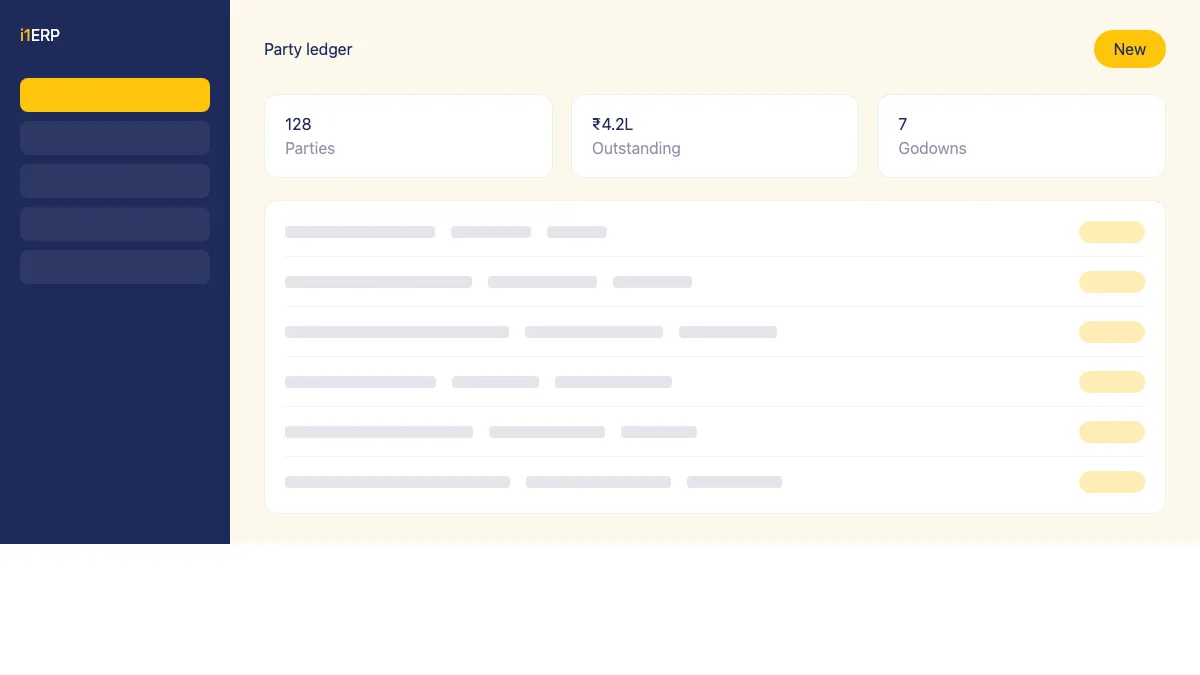
When the system holds a dispatch on its own because a party has crossed its limit, credit stops depending on who is in the room. The owner sets the limits once. After that, the software says no so nobody has to.
What changes for the team
The counter can serve a party without waiting on the owner, because the answer is on the screen. The owner can travel without the business taking on risk they cannot see. And at month-end, the outstanding is a number you can trust, party by party, instead of a total you hope is roughly right.
None of it is complicated. It is the same credit you already extend, with the one number that decides it moved out of memory and into plain sight.
Nikhil Joshi
Co-founder and Head of Operations
Nikhil runs delivery and operations, keeping every build on track from the first conversation through go-live and the years of support after it.
More insights.
From spreadsheets to a system your team trusts
Nobody outgrows spreadsheets in a day. Here is how the move usually goes, and how to make the switch without the chaos.
Abhilash Purohit
Your ERP should change in days, not months
A business that cannot change its software cannot change itself. Why the speed of change matters more than the feature list.
Abhilash Purohit
Where Tally ends and your operations begin
Tally is good at what it does. It was never meant to run your godown, your dispatch, or your day. Here is the line.
Nikhil Joshi